The Khotke Family Tomb in Czech Republic
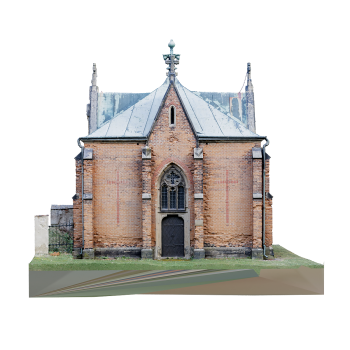
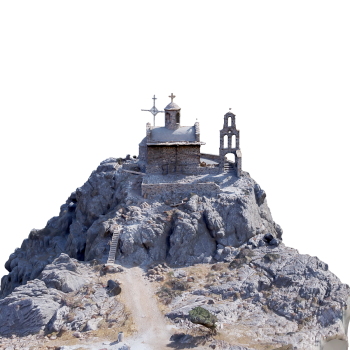
The Holtek family tomb located in Valtilov, Czech Republic, is a monument of historical and architectural value. It is an important representative of Gothic architectural style, known for its complex design and cultural heritage value. This tomb is a permanent commemoration of influential members of the local aristocratic Holtke family in the 19th century, showcasing the exquisite craftsmanship of the craftsmen at that time. Highlighting its Neo Gothic decorative details. Not only is it a historically significant location, but it is also a marvel of architecture, reflecting the evolution of artistic sensibility during the construction period. It is part of the rich cultural tapestry of Czech Republic.
Rijnieku Windmill in Latvia
A historic windmill located in Latvia. It was built based on Dutch design drawings and was constructed between 1867 and 1869. This type of windmill was considered suitable for large and powerful windmills at that time. Not only does it represent a traditional milling technique that utilizes wind energy, but it is also a part of Latvia's industrial heritage with a unique architectural style and historical value. It is usually used for grinding grains or pumping water, and its specific function and historical background may be related to its geographical location and agricultural needs at that time. Not only does it showcase engineering technology from history, but it also provides a way for modern people to understand past lifestyles
Latvian Sun ā kstes White Church
A landmark building located in J ē kabpils Autonomous City, Latvia. This Lutheran church was first built in the early 19th century, specifically from 1826 to 1829, replacing the old wooden church built in 1570. Built in neoclassical style, featuring a three story tower and prominent mountain walls. Not only is it the center of religious activities, but it is also a place to commemorate the outstanding figure Vecai Stenders of Latvia in the 18th century. There is a Stenders family cemetery nearby, and the surrounding environment of the church is beautiful, making it one of Latvia's important cultural and historical heritages.
The Ruins Church of Rakovets, Bulgaria
A church located in Rakovets, Bulgaria, built in the mid-19th century, specifically between 1822 and 1856, replacing an old wooden church from the early 18th century (1704) and consecrated in 1856. It was partially burned down in 1880 and subsequently rebuilt. Build using locally chiseled limestone. In 1946, the church was closed and most of its interior decorations were burned down. Between 1952 and 1980, this church was used as a warehouse. Until recently, although buildings were still covered with ceramic roof tiles, only the walls of the temple have been preserved.
Kumamoto Prefecture Imperial Master Hall, Japan
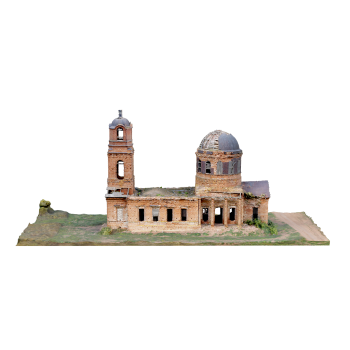
An important cultural property located in Kumamoto Prefecture, Japan, was established in memory of Master Hongfa, also known as Master Kukai. He is the founder of Shingon Buddhism in Japan and has had a profound influence on Japanese Buddhism, culture, and art. The Imperial Master Hall usually refers to the main hall in temples closely related to Master Kong Hai, which often preserves cultural relics and relics related to the master. Not only is it a place of religious belief, but also a platform for showcasing traditional Japanese architecture and art. These halls are often exemplars of wooden architecture, showcasing the exquisite craftsmanship and aesthetic value of ancient Japanese architecture. Enable people to have a deeper understanding of Japan's history, religion, and culture
Petrov gunsmith's villa
A historical residence located in Russia, famous for its association with the famous gunsmith Petrov. Built in the late 19th century, it was once the summer residence of Petrov, a renowned gunsmith known for his outstanding craftsmanship and innovative designs. This villa embodies the architectural style of the time, with a charming wooden exterior and intricate details. Located in a picturesque rural environment, it provides a peaceful escape from the hustle and bustle of city life. Surrounded by lush gardens and beautiful scenery, it showcases Petrov's love for craftsmanship and his way of life. Appreciate the skills and dedication of this gunsmith.
The Tower of Kings in Oropesa, Spain
A historical building located in Oropesa, Castell ó n Province, Spain, also known as the "Tower of Kings". Built in the 15th century, it is a stone tower approximately 30 meters high. Located by the beach, it has a strategic location and is used as an important facility for coastal defense and surveillance. The tower has a sturdy exterior and a medieval architectural style. Named after a king in the history of Oropeza, believed to be King Alfonso V. According to legend, he once stationed here to protect the region from the threat of pirates and invaders. It showcases the importance of medieval Spanish architectural style and coastal defense, as well as its rich historical and cultural heritage.
The Coastal Watchtower in Cuella City, Spain
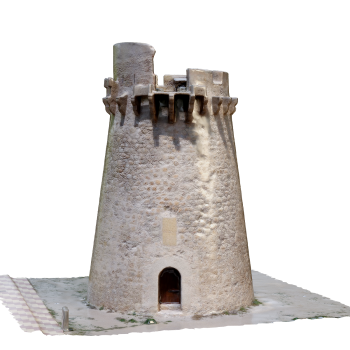
Located in the city of Cullera in Valencia, Spain, this ancient coastal watchtower was built in the 16th century to monitor and defend against pirate attacks along the Mediterranean coast. It is part of the coastal defense system of the Kingdom of Valencia, consisting of rough stone walls in a conical shape, with a bottom circumference of about 10 meters and a height of about 15 meters. The tower contains a basement, two floors, and a terrace with battlements. In the 18th century, a six pound iron cannon was installed on the terrace. At present, the tower has been fully restored and listed as a cultural heritage site. There is now a themed museum inside the tower, showcasing exhibitions on Mediterranean coastal defense and 16th century piracy.
Latvian stone chimney building
A historic building component located in Latvia. Built in the 19th century. This structure typically refers to a decorative fireplace or chimney, whose design and construction often reflect the architectural traditions and cultural characteristics of a specific region. As a representative of traditional Latvian architecture, it not only holds significant importance in architecture, but also reflects the local history and culture. As a historical building, it witnesses an important stage of local industrial development. It represents the past era and architectural style, attracting those interested in history and culture. Both local residents and tourists can experience unique charm and historical memories.
Halle Water Tower, Germany
Halle, located in Saxony Anhalt, Germany, is a historically significant water tower. Built between 1897 and 1899, it is approximately 54 meters tall and has a capacity of 1500 cubic meters. The bottom is composed of red granite, while the tower body is built with yellow bricks. Although it is now an unused water tower, it has become an iconic building and tourist attraction in the city of Halle. Witnessing the history of industrialization and urban development in the region, it is now an excellent place for local residents and tourists to enjoy the city scenery.
Wat Phra That Prayut, Bangkok, Thailand

Also known as Marble Temple, it is a famous Buddhist temple located in Bangkok, Thailand. This temple is renowned for its exquisite architectural art and cultural significance, and is one of the best examples of Thai architecture. Built in 1899, it was ordered by King Rama V of Thailand to commemorate his father, King Rama IV. The construction of the temple took over ten years and was not completed until 1911. The building extensively utilized Carrara marble imported from Italy, a unique architectural feature that earned it the nickname "Marble Temple". Not only is it one of the most photogenic landmarks in Bangkok, but it is also an important representative of Thai Buddhist culture and architectural art.
Mtskheta, Georgia
Mtskheta, located in Georgia, is an Eastern Orthodox cathedral with extremely high religious and cultural value. Built in the 4th century AD, the existing structure was constructed in the 11th century by architect Arsakidze during the reign of King Bagrat III. As a masterpiece of the early Middle Ages, it has been recognized as a World Heritage Site by UNESCO. It is the second largest church building in Georgia and one of the most important religious landmarks in the country. The architecture is based on the cross dome style, which emerged in early medieval Georgia and became the main style after Bagrat III unified Georgia.
Yokosuka Naval Port Guard Pavilion, Japan
Located at the Naval Port in Yokosuka City, Japan, it is a historic building in the area. A part of the Yokosuka Naval Arsenal, the Guard Pavilion was built around 1930 and serves as an important base for the Japan Maritime Self Defense Force. They mark the location of the entrance to the naval station and naval factory waters. The design features modern architectural characteristics, with a copper dome roof with a small dome and sunshade, resembling a baseball cap in shape. Not only is it a symbol of the history of Yokosuka Naval Port, but it is also a part of the cultural heritage of the region. You can learn about the history and culture of Yokosuka as a naval port here.
Serbia Belobrod Double Apartment
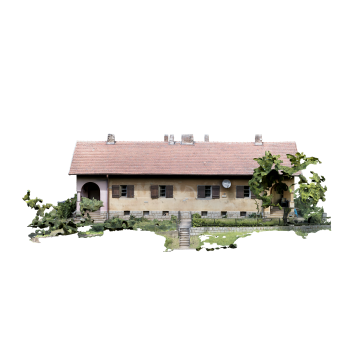
A house located in Belobrod, Serbia, with two independent apartments designed for engineers to live in. Beloborode was historically a gathering place for engineers and intellectuals. Built in the early 20th century, Serbia experienced rapid industrialization and modernization, leading to an increased demand for engineers and other technical professionals. Residential design not only meets residential needs, but also promotes communication and cooperation among professionals within the community. It is a part of Belgrade's historical and cultural heritage, witnessing the city's development and social changes in the 20th century.
Catholic Church of Auxerre, France
A Catholic church located in the town of Auxerre in the Nouvelle Aquitaine region of France. Built in the 13th century and renovated in the 15th century, it falls under the jurisdiction of the Archbishop of Limoges. Composed of a single nave dating back to the 12th century, with a painted paneled ceiling at the top, the church ends with a flat end. Not only is it the local religious center, but it is also a part of the rich religious architectural heritage of the region. Along with the Romanesque art of Uz è che, the circular church of Saint Bonnet la Rivi è re, and the painted lintel of Shaiac on the banks of the Charante River, it constitutes an important artistic and architectural attraction in the area.
Santa Maria de Cadet Church in Spain
A Romanesque church located in the Bois Valley of Catalonia, Spain, known for its high-density Romanesque architecture and listed as a UNESCO World Heritage Site. It is one of the nine Romanesque churches in the region, each with its own unique charm and highly valued for its well preserved state. Known for its spectacular rear hall and decorative details, the rear hall is decorated with Lombard style blind arches, serrated ribbons, and pilasters. It is the only church in Boye Valley that does not have a bell tower, but instead has a Baroque style bell shaped gable located above the main facade. The restoration work aims to maintain its state from the early 20th century
Thibaudier Residence in Japan
A historic Western style building located in Yokosuka City, Japan, which is part of the Yokosuka Modern Heritage Museum. Built around 1869, it was the official residence of Jules C é sar Claude Thibaudier, the deputy director of the Yokosuka Naval Arsenal. As one of the oldest Western style buildings on Honshu Island, it witnessed an important historical moment in Japan's modernization process. Before its demolition in 2003, it was an important landmark in Yokosuka City. Now, the Yokosuka City Museum of Modern Heritage is showcasing the original preservation materials of the residence and showcasing the development of the Yokosuka Naval Arsenal.
Sokorta, Croatia
It is a medieval defensive fortress located near Dubrovnik, Croatia, situated on a hill above the village of Dunave, near the Croatian Bosnian border. Originally built in the 14th century as a defensive fortress, it played an important role in protecting nearby villages. Having sturdy stone walls, towers, and other defense mechanisms to resist intruders. In 2013, after extensive restoration work, this castle was opened to tourists, and many historical relics were discovered during the restoration process, some of which can be traced back to the late Bronze Age and early Bronze Age.
Kaliningrad Soviet House
The Soviet House located in Kaliningrad, also known as the Soviet Building, is a grand and symbolic building. The construction began in 1970, but it has not yet been completed and put into use. Located in the central square of Kaliningrad, at the intersection of Shevchenko Street and Lenin Street. Considered one of the tallest buildings in the city, it consists of two connected 21 story towers. At present, it is closed to tourists and does not provide any practical use, but it continues to attract the attention of tourists and citizens. There are active discussions about its future use or development projects, and some initiatives are proposed to transform it into a hotel or cultural center.
Ukrainian Archangel St. Michael's Church
Located in StaraSil village, Ukraine, it is a historic religious building that embodies the architectural characteristics of the Eastern Orthodox Church at that time. This church is not only the center of local religious life, but also an important part of Ukraine's cultural heritage. Witnessed the inheritance of religious beliefs and the development of architectural art in the region. Built in the 17th century. The design incorporates traditional religious elements and local art styles, and the interior decoration may include murals, icons, mosaics, etc. These artworks showcase the religious stories of Eastern Orthodoxy and the lives of saints. As an important landmark in rural areas of Ukraine, it attracts numerous believers and tourists to visit.
Popular Models
Shrine
115 View
King Kong Hercules Wood Carving
166 View
The bell tower of a Japanese temple
189 View
Japanese Samurai Helmet
117 View
Random Model
Adidas NMD PW x BBC sneaker
578 View
Ancient Mayan limestone lintel
409 View
Japanese tree toad male
268 View
Manta ray (with 3D animated model)
304 View
camp bed
103 View
Medical operating retractors
291 View
Trilobite Fossil
350 View